Direct Answer
A drain line that repeatedly clogs can be collecting biological film and debris, but recurrence may also point to poor drainage pitch, a trap problem, a damaged pan, a failed condensate pump, or a frozen coil. Clearing one blockage may restore flow temporarily; the lasting fix depends on finding where water stops and why.
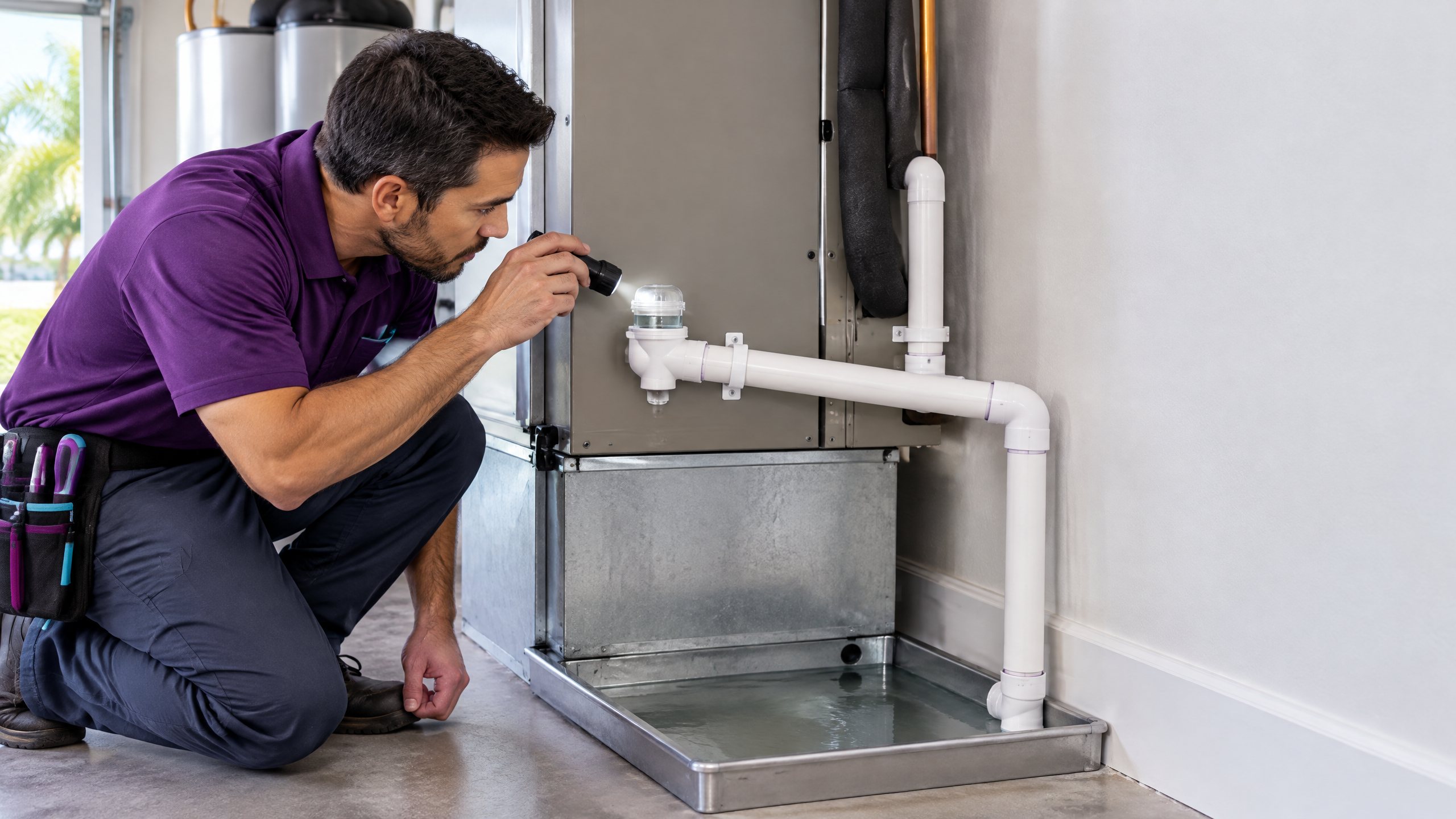
Your air conditioner removes moisture while it cools. That water should fall from the indoor coil into a primary pan and leave through the condensate drain. When the line backs up, water may collect near the air handler, enter a secondary pan, appear at an overflow outlet, or trigger a water-level switch that stops cooling.
One clog can be a maintenance issue. A clog that returns soon after clearing is different: the drain may still contain buildup, or another part of the condensate system may be preventing reliable flow. The location of the air handler, line routing, pan condition, and whether the home uses gravity drainage or a pump all affect the diagnosis.
What the Condensate Drain Is Supposed to Do
The U.S. Department of Energy’s Building America Solution Center explains that moisture condenses on the cold evaporator coil, falls into the primary pan, and is directed to a condensate drain.[1] The pan and line must keep moving that water whenever the system is removing moisture.
ENERGY STAR includes condensate-drain inspection in a typical professional maintenance visit and notes that a plugged drain can cause water damage and affect indoor humidity.[2] In Tampa, a drain problem can become noticeable during extended cooling periods because the system continues producing condensate while it operates.
Five Reasons an AC Drain Line Can Clog Again
1. Film and debris remain inside the line
ACCA explains that biological growth and debris can accumulate in condensate piping and contribute to blockage.[3] Removing only the material at one opening may restore flow without clearing deposits farther along the pipe. A technician may need to inspect and clear the full run, then confirm that water reaches the discharge point.
2. The pan is dirty, damaged, or not draining correctly
A dirty pan can feed more material into the line. An older metal pan can also corrode or leak, while a damaged pan may release water even when the pipe is open. DOE guidance recommends checking for stagnant water, blocked lines, overflowing pans, corrosion, and leakage rather than assuming every puddle is the same problem.[1]
3. The pitch or trap is interfering with drainage
Condensate lines rely on the correct route and, in many systems, a properly configured trap. DOE guidance notes that an ineffective trap on a draw-through system can allow air movement to interfere with drainage. The piping also needs to slope toward its discharge point.[1] A line that holds water in a low spot can collect material and block repeatedly.
4. A condensate pump or water-level device is involved
Some installations use a condensate pump because gravity drainage is not practical. A blocked discharge tube, dirty reservoir, failed pump, or control issue can resemble a simple drain clog. A water-level device may shut the AC off when water rises; that shutdown limits overflow risk but does not clear the restriction or identify the cause.
5. A frozen coil is adding a separate problem
ACCA notes that a heavily loaded filter can restrict airflow and contribute to evaporator-coil icing; when the ice melts, the pan receives additional water.[3] Ice can also involve blower, coil, or refrigerant-circuit conditions. If you see ice or weak airflow, treat that as more than a drain-maintenance question and request AC repair.
A float switch is a warning, not the repair
If the system stops because water has risen, do not bypass the switch. The useful next step is to find whether the primary line, pan, trap, pump, or discharge path is preventing normal drainage.
Signs That Point to a Drainage Problem
- Water near the indoor unit: Note whether it is inside the cabinet, in the primary pan, or in a larger pan below the equipment.
- Cooling stops unexpectedly: A water-level device may have opened the control circuit, but other control problems can also stop the system.
- A secondary outlet starts dripping: Record where the water exits and whether the normal discharge is flowing.
- Ceiling or wall staining: Turn cooling off if water is actively reaching building materials and arrange service promptly.
- The same clog returns: Tell the technician when it was last cleared and what method was used.
- Ice or weak airflow: Do not assume the drain is the only problem.
Water at an outdoor condensate outlet can be normal while the AC removes moisture. The concern is a change from the system’s usual pattern, water appearing at an overflow location, drainage into the home, or repeated shutdowns.
What a Homeowner Can Check Without Opening Equipment
Document where the water appears, whether the thermostat shows a message, and whether the normal drain outlet is flowing. Check an accessible filter and replace it only with the correct size and type. Keep stored items away from the air handler and take photographs of the leak or staining before the condition changes.
Do not open electrical compartments, bypass a water-level switch, or add a chemical to an unknown access point. Condensate layouts, pan coatings, traps, pumps, pipe materials, and manufacturer instructions differ. A qualified technician can choose the appropriate clearing and testing method for the actual system.
What a Technician May Inspect
A focused visit may trace the primary line from the pan to the discharge point, check the accessible pan for buildup or damage, verify trap condition and pipe pitch, inspect a condensate pump when present, test water-level controls, and confirm flow after service. If ice or weak airflow is present, the visit may also include the filter, blower, indoor coil, temperatures, and refrigerant-circuit measurements.
For a confirmed obstruction, On The Way offers condensate drain cleaning. If the water is coming from a corroded pan, disconnected fitting, frozen coil, or failed pump, clearing the line alone will not address the complete condition.
How to Reduce Repeat Drain Problems
Include the condensate system in regular AC maintenance, keep the correct filter in place, and respond when a secondary outlet begins dripping or a float switch shuts cooling down. ENERGY STAR recommends drain inspection during a typical maintenance check and homeowner filter inspection or replacement as a routine task.[2]
Our broader Tampa AC maintenance checklist covers seasonal equipment care. If the home feels damp even when the drain is open, read why a Tampa home can feel humid with the AC running; drainage is only one part of moisture control.
Frequently Asked Questions
Can a clogged AC drain line shut the system off?
Yes. Some systems have a water-level switch that interrupts cooling when condensate backs up. The shutdown limits the chance of an overflow, but it does not identify why the drain blocked. Do not bypass the switch; have the drain, pan, trap, pump, and related conditions inspected.
Is water coming from the outdoor AC drain pipe normal?
Water from the normal condensate discharge can be expected while the system removes moisture. The location and amount vary by installation and operating conditions. Water from a secondary outlet, a ceiling, the air handler cabinet, or an emergency pan deserves prompt attention because it may indicate backup or leakage.
Why did the AC drain line clog again after it was cleared?
The prior blockage may not have been fully removed, or the system may still have a dirty pan, recurring biological film, poor pitch, a trap problem, a displaced line, a failing pump, or excess water from a frozen coil. Recurrence is a reason to inspect the drainage path rather than repeat the same temporary step.
Should I pour bleach or another chemical into the AC drain line?
Do not add a chemical unless the equipment manufacturer or a qualified technician has confirmed that product and access point for your system. Drain materials, pumps, traps, pan coatings, and manufacturer instructions differ. Homeowners can document the leak, check an accessible filter, and request service without opening the equipment.
Sources
- U.S. Department of Energy Building America Solution Center: HVAC Condensate Drain Pans and Drainage
- ENERGY STAR: Heating and Cooling Maintenance Checklist
- ACCA HVAC Blog: The Ultimate Guide to HVAC Condensate
Reviewed by a Local HVAC Owner
Dustin Miller, Owner of On The Way Heating & Air. Dustin began working in HVAC with his father in 2006 and has helped build several service companies. This article provides general homeowner guidance; the cause of a specific leak, blockage, or shutdown depends on the equipment and drainage configuration at the home.