
Central AC Repair in Tampa, Florida
When Your Whole-Home Cooling System Goes Down
Nothing worse than waking up on a Tampa summer morning and realizing your central AC ain't working. One room's warm, another's warmer, and within an hour the whole house feels like an oven.
Central air conditioning is different from window units or mini-splits. When it breaks, your entire house suffers. You can't just move to another room that has working AC—there is no other room. You need it fixed, and you need it fixed now.
At On The Way Heating & Air, we repair central AC systems all over North Tampa. From Carrollwood to New Tampa, from USF to Wesley Chapel, we know these systems inside and out. We know what breaks, why it breaks, and how to fix it right the first time.
What Is Central Air Conditioning?
Before we get into repairs, let's make sure we're talking about the same thing.
Central AC is a whole-home cooling system that uses ductwork to distribute cold air throughout your entire house. It's got two main components:
Outdoor unit (condenser): The big box outside your house that releases heat and houses the compressor, condenser coil, and fan.
Indoor unit (evaporator): Usually mounted above your furnace or air handler in the attic, closet, or garage. Contains the evaporator coil and blower that moves air through your ducts.
These two units work together. Refrigerant flows between them through copper lines, picking up heat from inside your house and dumping it outside. The blower pushes cooled air through your ductwork and into every room.
When central AC works right, every room in your house stays comfortable. When it breaks, you've got a problem that affects your entire home.
Common Central AC Problems in Tampa Homes
Tampa's climate is brutal on central air systems. Six months of nonstop operation, extreme humidity, lightning strikes, and salt air near the coast—all of it takes a toll.
Compressor Won't Start
Hear a humming sound but the outdoor unit won't kick on? Usually means the compressor's trying to start but can't. Could be a failed capacitor, bad contactor, or seized compressor. This is an emergency—running a humming compressor without fixing it will destroy it completely.
Weak Airflow Throughout the House
Some rooms barely getting air while others are fine? Could be ductwork problems, a failing blower motor, or a clogged evaporator coil. Sometimes it's as simple as a dirty filter choking airflow, but often it's something more serious.
System Runs But Doesn't Cool
Air's blowing but it ain't cold. Usually means low refrigerant from a leak, a failed compressor, or frozen evaporator coil. Don't just keep running it—you're wasting electricity and possibly making the problem worse.
Water Leaking Inside
Seeing water around your air handler or stains on your ceiling? Condensate drain line is clogged, drain pan is cracked, or the evaporator coil is frozen and melting. Water damage gets expensive fast—get this fixed immediately.
Short Cycling (Turns On and Off Rapidly)
System kicks on, runs for a minute or two, shuts off, then repeats the cycle. Usually means refrigerant problems, a dirty coil, electrical issues, or an oversized system. Short cycling burns up components fast.
Strange Noises
Grinding from the outdoor unit usually means bad bearings in the fan motor or compressor. Banging could be loose parts. Squealing might be a worn blower motor or bad belt (on older systems). None of these noises fix themselves—they get worse.
Why Central AC Systems Break Down in Tampa
Non-Stop Summer Operation
Your central AC runs May through October—six solid months, often 12+ hours a day. That's double the runtime of northern systems. More hours equals more wear on every component.
Humidity Overload
Tampa's 75% summer humidity creates constant condensation in your evaporator coil. That water drips into the drain pan and flows out through drain lines. When those lines clog with algae (and they will in Tampa), you get water damage, mold, and system shutdowns.
Dirty Coils Destroy Compressors
Between pollen, dust, and salt air, your outdoor condenser coil gets filthy. A dirty coil makes your compressor work way harder than it should, running hotter and drawing more power. Eventually it fails—and compressor replacement ain't cheap.
Lightning Surges
Tampa's the lightning capital of North America. Even when lightning doesn't directly hit, power surges weaken capacitors, contactors, and control boards. These components gradually fail until one day your system won't start.
Ductwork Issues
Tampa homes with central AC often have ductwork in attics where it's 130+ degrees in summer. Joints separate, insulation falls off, ducts collapse. Lost air means weak cooling and sky-high electric bills.
Deep Dive: Refrigerant Leak Repair
Refrigerant leaks are one of the most common central AC problems we fix, and they're often mishandled by other companies.
How Refrigerant Works: Your central AC doesn't "use up" refrigerant like gas in a car. It's a closed-loop system—same refrigerant circulates forever. If refrigerant's low, that means there's a leak somewhere.
Where Leaks Happen: Most common spots: connections at the outdoor unit, evaporator coil (especially in Tampa's humid climate), or the refrigerant lines running between units. Sometimes the coil itself develops pinhole leaks from corrosion.
What We Do: Real leak repair means finding the actual leak and fixing it permanently. We use electronic leak detectors and UV dye to pinpoint exactly where refrigerant's escaping. Then we repair or replace the leaking component, pressure test the system, vacuum it down, and recharge it to manufacturer specs.
What Some Companies Do (That's Wrong): They top off your refrigerant without finding the leak. Charges you a few hundred bucks, system works for a few months, then refrigerant's low again. You're back to square one, except now you've paid twice and the leak's still there.
We don't do that. If your system's low on refrigerant, we find the leak and fix it properly.
Pro-Tip: If someone says your central AC "just needs a recharge" without mentioning leak detection, get a second opinion. Systems don't just lose refrigerant—there's always a leak.
Deep Dive: Blower Motor Problems
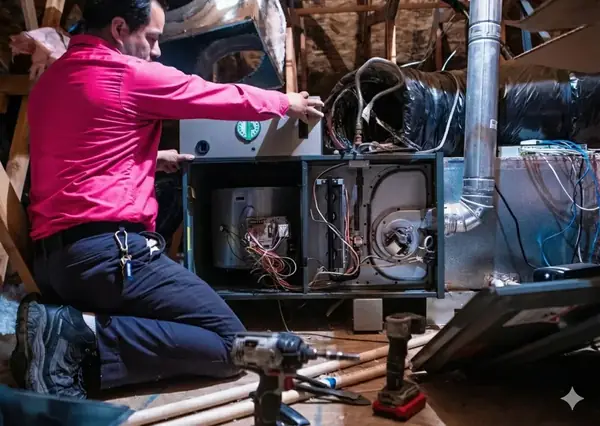
Your blower motor is what pushes cooled air through your ductwork and into every room. When it fails, your whole house loses cooling.
Symptoms of Blower Motor Problems: Weak airflow from all vents, strange noises from the air handler, AC runs but no air comes out, or the system won't turn on at all. Sometimes the blower starts and stops randomly.
What Causes Blower Motors to Fail: Dirty air filters are the #1 killer of blower motors. When filters get clogged, the motor works way harder to pull air through. It overheats, bearings wear out, and eventually it seizes up. In Tampa's dusty, pollen-heavy environment, this happens fast if you don't change filters monthly.
Capacitor vs Motor Failure: Sometimes it's not the motor itself—it's the capacitor that starts the motor. Testing the capacitor is the first step. If the capacitor's good but the motor still won't run, then we're looking at motor replacement.
Single-Speed vs Variable-Speed Motors: Older central AC systems have single-speed blowers—they're either on full blast or off. Newer systems use variable-speed motors that adjust airflow based on demand. Variable-speed motors are more efficient but more expensive to replace.
We'll test your motor and capacitor, tell you exactly what's failed, and give you options for repair or replacement.
Pro-Tip: Change your air filter every month during cooling season. It's the single cheapest thing you can do to extend your blower motor's life.
Deep Dive: Ductwork Leaks and Failures
Ductwork problems are sneaky. Your central AC runs fine, but half your cold air is leaking into your attic instead of cooling your house.
How to Spot Ductwork Problems: Rooms that never cool properly, dust everywhere despite changing filters, high electric bills, or visible gaps/disconnections in accessible ductwork. Sometimes you'll hear whistling or rushing air sounds in the attic.
Common Ductwork Failures: In Tampa, ductwork is usually in the attic where summer temps hit 130+ degrees. Mastic sealant dries out and cracks. Joints separate. Flex duct gets crushed under insulation. Boots (the connections to ceiling vents) pull loose.
What Lost Air Costs You: EPA estimates that 20-30% of air moving through ductwork in typical homes is lost to leaks. That's 20-30% of your electric bill going straight into your attic. Plus your system runs longer trying to cool the house, wearing out components faster.
How We Fix It: We inspect accessible ductwork for visible problems, use pressure testing to find hidden leaks, and seal everything properly with mastic and metal tape (never just duct tape—that fails in attics). Major failures might require duct replacement.
Pro-Tip: If one room never cools right and you've ruled out everything else, check if that room's ductwork actually reaches all the way to the vent. We've found "installed" vents that ain't connected to anything.
What We Check During a Central AC Repair Call
Outdoor Unit Inspection
- Compressor function and amp draw
- Condenser coil condition
- Fan motor operation
- Capacitor and contactor testing
- Refrigerant pressures
- Electrical connections
Indoor Unit Inspection
- Evaporator coil condition and temperature
- Blower motor function
- Air filter condition
- Condensate drain flow
- Thermostat calibration
- Airflow measurements
System Performance
- Temperature split (difference between return and supply air)
- Refrigerant charge verification
- Amperage on all motors
- Overall system efficiency
We diagnose the actual problem, explain what's wrong in plain English, and give you options for fixing it.
DIY Checks Before Calling for Repair
Check Your Thermostat: Make sure it's set to "Cool" and the temperature is lower than current room temp. Sounds obvious, but it happens. Also check if it's got dead batteries (if it's battery-powered).
Check Your Air Filter: A completely clogged filter can cause all kinds of problems. Pull it out—if you can't see light through it, it needs replacing.
Check Your Circuit Breakers: You've got two breakers for central AC: one for the outdoor unit, one for the air handler. Make sure both are on. If one's tripped, try resetting it once. If it trips again immediately, you've got a real problem—don't keep resetting it.
Check the Condensate Drain: Look for water around your air handler or in the drain pan. If there's standing water, the drain's clogged. You can try pouring vinegar down the drain line, but if it's backed up badly, you'll need professional help.
Check for Ice: Ice on refrigerant lines or visible on the evaporator coil means something's seriously wrong. Turn the system off and call us—running it with ice will damage the compressor.
If you've checked all that and still got problems, time to call a professional.
When to Repair vs Replace Your Central AC
Repair Makes Sense When: System's less than 10 years old, problem is a single component failure, repair cost is reasonable compared to system age, and you're happy with the system's performance otherwise.
Replacement Makes Sense When: System's 15+ years old, needs major repairs (compressor, full coil replacement), uses R-22 refrigerant that's expensive and scarce, has had multiple repairs in the past year, or electric bills keep climbing despite repairs.
The Rule: Multiply the system's age by the repair cost. If the total is over , replacement probably makes more sense than repair.
We'll be honest about whether repair makes sense or if you're better off replacing the system.
Related AC Services
We offer a full range of air conditioning services to keep your Tampa home comfortable:
- AC Repair – Fast diagnosis and repair of all AC problems.
- Emergency AC Repair – Same-day service when your AC breaks down unexpectedly.
- AC Installation – Professional installation of new high-efficiency systems.
- AC Replacement – When it's time for a new system, we help you choose the right one.
- AC Tune-Up – Preventive maintenance to keep your system running efficiently.
What Sets On The Way Apart for Central AC Repair
We Fix It Right the First Time
No shortcuts, no band-aids. We find the real problem and fix it properly so you're not calling us back next week with the same issue.
Honest Assessments
If your system's on its last legs and repair doesn't make financial sense, we'll tell you straight. We're not trying to sell you repairs that won't last.
Central AC Specialists
This is what we do—whole-home cooling systems. Not mini-splits, not window units, not commercial refrigeration. Central AC in Tampa homes.
Same-Day Service
Call before 1 PM and we'll get there same day. If we can't make it, your diagnostic fee is waived. We know Tampa summers don't wait.
Frequently Asked Questions
How long does central AC repair take? +
Depends on the problem. Simple fixes like capacitor replacement take 30 minutes. Major repairs like evaporator coil replacement can take 4-6 hours. We'll give you a time estimate once we diagnose the issue.
Will you have the parts I need? +
For common repairs (capacitors, contactors, filters, basic components), yes—we carry them on our trucks. For major components (compressors, coils, blower motors), we might need to order parts, but we can usually get them same-day or next-day.
Can you fix any brand of central AC? +
Yes. We work on all major brands—Carrier, Trane, Lennox, Rheem, Goodman, Bryant, American Standard, York, and more. Central AC systems all work on the same basic principles regardless of brand.
Do I need to replace my whole system or just the outdoor unit? +
Depends. If the outdoor unit failed but the indoor coil and air handler are fine, sometimes we can replace just the outdoor unit. But if your system's old (10+ years), matched replacement of both units usually makes more sense for efficiency and longevity.
What if my central AC uses R-22 refrigerant? +
R-22 (Freon) was phased out in 2020. If you need refrigerant added, it's expensive and getting more scarce. Small leaks might be worth fixing, but major refrigerant repairs on R-22 systems usually mean it's time to replace with a modern system using R-410A or R-454B.
Ready to Get Your Central AC Fixed?
Your whole house depends on that central AC system. Don't suffer through Tampa heat when one call can get it fixed.
Call 813-922-2209 or fill out the form below.
Serving all of North Tampa—Carrollwood, New Tampa, USF, Temple Terrace, Wesley Chapel, and along Bruce B. Downs Boulevard.
*Same-day service guarantee: Calls received before 1 PM on regular business days—if we can't make it the same day, your diagnostic/service fee is waived.