
AC Capacitor Replacement in Tampa, Florida
When Your AC Won't Start

Your AC is humming but the fan won't spin and the compressor won't start—classic signs of a failed capacitor, one of the most common AC repairs in Tampa's brutal heat. The good news? It's usually a quick, same-day fix. At On The Way Heating & Air, we replace capacitors all day, every day during cooling season. Call before 1 PM and we'll be there today, or you don't pay.
What Does an AC Capacitor Do?
Think of a capacitor like a battery that gives your motors the electrical jolt they need to start running.
Your AC has two main motors:
- The compressor (in the outdoor unit)
- The condenser fan motor (also in the outdoor unit)
Both need a burst of electricity to overcome inertia and get spinning. That's what the capacitor provides. It stores electrical energy, then releases it in a quick surge when your AC needs to start.
Two Types of Capacitors
Start capacitor: Provides the initial jolt to get motors started, then drops out of the circuit once they're running.
Run capacitor (most common): Provides both the starting surge and continuous power while the motor runs. Most residential AC units use run capacitors—they're cylindrical, about the size of a soda can, and usually have two or three wires connected to terminals on top.
When a capacitor fails, motors can't start. Your compressor hums but won't run. Your fan won't spin. Your AC doesn't cool.
Signs Your AC Capacitor Has Failed
Humming Sound But Won't Start
You hear the outdoor unit trying to start—a humming or buzzing noise—but nothing actually kicks on. The compressor's trying to start but doesn't have the electrical surge it needs. Classic capacitor failure.
Hard Starting
Takes several tries to get the AC running, or it takes way longer than usual to start after the thermostat calls for cooling. Weak capacitor that's on its way out.
AC Shuts Off Randomly
System starts fine but shuts down unexpectedly before completing a cooling cycle. Capacitor can't maintain the power supply the motors need.
No Cooling But Everything Seems to Run
Sometimes a failed capacitor only affects the compressor. The outdoor fan spins, air blows from your vents, but it's not cold because the compressor isn't running. Look at your outdoor unit—if the fan's spinning but you don't hear/feel the compressor vibration, that's likely a bad capacitor.
Clicking Sounds
Repeated clicking from the outdoor unit when it's trying to start. The system's attempting to engage but failing.
Higher Electric Bills
A failing capacitor makes motors work harder and draw more current. You might see electric bills climb before the capacitor fails completely.
Why Capacitors Fail So Often in Tampa
Capacitors are one of the most failure-prone parts in your AC system, especially in Tampa.
Extreme Heat
Your outdoor unit sits in direct Florida sun where temperatures can hit 130+ degrees. Heat kills capacitors. The hotter they run, the faster they degrade.
Constant Operation
Tampa's AC units run May through October—six months of near-constant operation. Every time your compressor starts, the capacitor discharges and recharges. More cycles means faster wear.
Lightning and Power Surges
Tampa's the lightning capital of North America. Lightning strikes don't have to hit your house directly—nearby strikes cause power surges that damage capacitors. Even small surges accumulated over years weaken them.
Age
Capacitors last 10-20 years in ideal conditions. In Tampa's brutal climate with heavy use, expect 8-12 years. Some fail sooner. Capacitors are a wear item like brake pads—they're gonna fail eventually.
Voltage Fluctuations
Grid voltage variations stress capacitors. Every time voltage spikes or sags, it impacts the capacitor's internal components.
The good news? Capacitor replacement is quick and cheap compared to most AC repairs.
Deep Dive: How Capacitors Actually Work
A capacitor stores electrical energy in an electric field between two conductive plates separated by an insulating material (dielectric).
When your AC starts: The capacitor releases stored energy rapidly, providing the high starting torque your compressor and fan motors need. Think of it like a spring—you compress it (charge it), then release it fast when needed.
While running: Run capacitors also help motors operate efficiently while they're spinning, smoothing out the AC current and improving the power factor.
What happens inside a failing capacitor: The dielectric material degrades from heat and electrical stress. The capacitor loses its ability to hold a charge. Bulging you sometimes see on failed capacitors? That's internal pressure from dielectric breakdown.
Microfarad (µF) rating: Every capacitor has a specific capacitance rating measured in microfarads. Your system needs the right rating—too high or too low and motors won't run properly. When we replace a capacitor, we match the exact µF rating your system requires.
Pro-Tip: Never try replacing a capacitor yourself unless you know what you're doing. Even with power off, capacitors store lethal voltage. They must be safely discharged before touching them.
Deep Dive: Testing and Diagnosing Capacitor Problems
Before replacing a capacitor, we verify it's actually bad. Not every startup failure is a capacitor.
Visual Inspection
We look for obvious signs: bulging or swelling on the capacitor body, oil leaking from the bottom, burn marks or corrosion on terminals, cracks in the casing. Any of these means immediate replacement.
Multimeter Testing
We test the capacitor's actual capacitance with a meter. If it reads significantly lower than the rated value (usually 10%+ below), it's failed or failing. We also check for shorts and opens.
Voltage Testing
We verify the capacitor's receiving proper voltage. Sometimes the problem ain't the capacitor—it's wiring or the contactor not sending power.
Amperage Draw Testing
We measure how much current the motors are drawing. Excessive amperage often indicates a weak capacitor making motors work too hard.
Functional Testing
Sometimes the only way to confirm is to try a known-good capacitor. If the system starts right up with a test capacitor, we know the original was bad.
Pro-Tip: If your AC won't start and you see a bulging capacitor, that's definitely the problem. But if the capacitor looks fine, it still might be bad—internal failures don't always show external signs.
Deep Dive: The Replacement Process
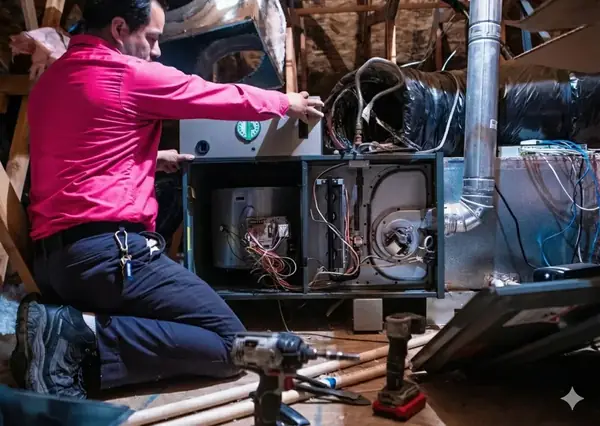
Capacitor replacement looks simple but has critical safety steps.
Power Down Everything
We shut off power at both the thermostat and the breaker. Double-check with a meter that there's no voltage at the unit.
Discharge the Capacitor
This is the most dangerous step if done wrong. Even with power off, the capacitor stores high voltage. We use an insulated screwdriver or discharge tool to safely short the terminals and release stored energy. Do this wrong and you get a nasty shock or worse.
Document the Wiring
We take photos or label which wire goes to which terminal. Capacitors typically have three terminals labeled C (common), HERM (compressor), and FAN. Wiring them wrong can damage motors.
Remove the Old Capacitor
Disconnect wires, remove the mounting bracket or strap, pull out the failed capacitor.
Install the New Capacitor
Mount the new one securely, reconnect wires to the correct terminals (following our photos), verify all connections are tight.
Test
Power everything back on, verify the compressor and fan both start properly, check amp draw to make sure motors are running normally, listen for unusual sounds.
Takes an experienced tech 15-30 minutes including testing. Takes a homeowner significantly longer and is genuinely dangerous without proper knowledge.
Pro-Tip: Always replace capacitors with the exact same specifications—same voltage rating and microfarad rating. Using the wrong capacitor damages motors.
When We Replace Other Components with the Capacitor
Sometimes capacitor failure indicates or causes other problems.
Contactors
The electrical switch that sends power to your compressor and fan. If the contactor's contacts are pitted or burned, we replace it too. Bad contactors often damage capacitors, and vice versa.
Hard Start Kit
If your compressor is struggling to start even with a new capacitor (common on older systems), we might recommend adding a hard start kit—an additional capacitor that provides extra starting torque.
Compressor Check
We always verify the compressor itself is okay. If the compressor's failing mechanically, a new capacitor won't help. We test amp draw and listen for grinding or other failure sounds.
Wiring and Connections
Corroded or loose wiring can cause capacitors to fail prematurely. We clean and tighten all connections when replacing capacitors.
How to Prevent Premature Capacitor Failure
You can't prevent capacitors from eventually wearing out, but you can help them last longer.
Install a Surge Protector
Whole-home surge protection or at minimum an AC surge protector helps prevent lightning-related failures. In Tampa, this is worth it.
Shade the Outdoor Unit
If possible, keep your condenser out of direct afternoon sun. Cooler operating temperatures extend capacitor life.
Regular Maintenance
Annual maintenance catches weak capacitors before they fail completely. We test capacitors during tune-ups and can replace them before they strand you without AC.
Keep the Condenser Clean
Dirty coils make the compressor work harder, which stresses the capacitor. Regular coil cleaning helps.
Don't Ignore Warning Signs
Hard starting or random shutdowns are signs of a failing capacitor. Replace it before it fails completely during a heat wave.
Related AC Services
Need other AC services? We've got you covered:
- AC Repair – Fast diagnosis and repair of all AC problems.
- Emergency AC Repair – Same-day service when your AC breaks down unexpectedly.
- AC Maintenance – Preventive maintenance to catch problems early.
- AC Compressor Replacement – When the compressor itself needs replacing.
Why Choose On The Way for Capacitor Replacement
Fast Service
Capacitor replacement is quick. We carry common capacitors on our trucks and can usually fix you same day.
Proper Testing
We verify the capacitor's actually bad before replacing it. And we test other components to make sure there aren't underlying issues.
Safety First
We handle high-voltage components safely every day. No shortcuts, no risks.
Honest Diagnosis
If your capacitor looks fine and something else is the problem, we tell you. We're not selling parts you don't need.
Frequently Asked Questions
How much does capacitor replacement cost? +
We can't list pricing, but capacitors are one of the most affordable AC repairs. It's a relatively cheap part and quick labor. Way less than compressor or coil replacement.
How long does capacitor replacement take? +
15-30 minutes for an experienced tech. Could take an hour if there are complications like corroded connections or if we need to test other components.
Can I replace the capacitor myself? +
Technically possible if you're experienced with electrical work, but genuinely dangerous. Capacitors store lethal voltage even with power off. One mistake can kill you or damage your AC. We strongly recommend professional replacement.
Will a new capacitor fix all my AC problems? +
If the capacitor was the only problem, yes. But sometimes capacitor failure is a symptom of other issues. We diagnose the whole system to make sure replacing the capacitor actually solves the problem.
How long will a new capacitor last? +
8-15 years typically in Tampa's climate. Could be longer with surge protection and good maintenance. Could be shorter with heavy use or repeated power surges.
Can I use a higher-rated capacitor for better performance? +
No. Use the exact microfarad rating specified for your system. Higher or lower ratings damage motors.
Ready to Get Your AC Running Again?
Failed capacitor means no cooling, but it's a quick fix when done right.
Call 813-922-2209 for fast capacitor replacement or fill out the form below.
Serving all of North Tampa—Carrollwood, New Tampa, USF, Temple Terrace, Wesley Chapel, and along Bruce B. Downs Boulevard.
*Same-day service guarantee: Calls received before 1 PM on regular business days—if we can't make it the same day, your diagnostic/service fee is waived.